
How to Mitigate Aluminum Current Collector Corrosion in LiFSI-Based Electrolytes
As battery technologies continue to pursue higher energy density and improved safety, lithium bis(fluorosulfonyl)imide (LiFSI) has attracted significant attention as a promising alternative to conventional lithium hexafluorophosphate (LiPF₆), thanks to its high ionic conductivity, excellent thermal stability, and other advantages.
However, one major challenge associated with LiFSI-based electrolytes is aluminum current collector corrosion. This issue can negatively affect battery cycle life and, in severe cases, raise potential safety concerns.
However, one major challenge associated with LiFSI-based electrolytes is aluminum current collector corrosion. This issue can negatively affect battery cycle life and, in severe cases, raise potential safety concerns.
Why Does LiFSI Corrode Aluminum?
At elevated charging voltages, the FSI⁻ anions in LiFSI can destabilize and disrupt the native aluminum oxide layer on the surface of the aluminum current collector.
As the protective oxide layer dissolves, fresh aluminum becomes exposed to the electrolyte and reacts to form soluble aluminum fluorosulfonylimide complexes. Once these complexes dissolve into the electrolyte, additional fresh aluminum is exposed, allowing the corrosion process to continue.
This continuous cycle of oxide layer breakdown, aluminum dissolution, and renewed exposure can ultimately lead to severe corrosion of the aluminum current collector.
Strategies for Mitigating Aluminum Corrosion
1. Introducing Protective Passivation Agents
Reintroducing LiPF₆:
One effective strategy is to incorporate conventional LiPF₆ into LiFSI-based electrolyte systems.
LiPF₆ can undergo decomposition in the electrolyte and generate fluorine-containing species that contribute to the formation of a dense and insoluble AlF₃-based protective layer on the aluminum surface. This passivation layer can effectively reduce further attack by FSI⁻ anions.
Combining with Borate-Based Lithium Salts:
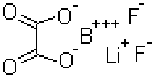
Lithium difluoro(oxalato)borate (LiDFOB) and lithium bis(oxalato)borate (LiBOB) are also effective candidates for improving aluminum surface stability.
These salts can participate in interfacial reactions and contribute to the formation of protective surface films containing components such as B–O and Al–F. LiDFOB is particularly promising because it combines the advantages of fluorinated salts and oxalate borate chemistry, helping to form a relatively dense and stable protective layer.
2. Optimizing the Electrolyte Environment
High-Concentration Electrolyte Strategies:
In highly concentrated LiFSI-based electrolytes, lithium ions and FSI⁻ anions exhibit stronger coordination, significantly reducing the number of free solvent molecules.
This change in the solvation structure can reduce the dissolution and transport of aluminum-containing species and promote the formation of a stable, LiF-rich interfacial layer, thereby helping suppress aluminum corrosion.
Alternative Solvent Systems:
Studies have shown that ionic liquids can also help mitigate aluminum corrosion.
In ionic liquid-based electrolyte systems, aluminum–FSI complexes may exhibit lower solubility and can contribute to the formation of relatively stable interfacial layers on the aluminum surface.
In addition, low-dielectric-constant ether-based solvents may reduce the solubility of certain corrosion products, thereby slowing the corrosion process.
3. Materials Innovation: New Lithium Salts and Protective Coatings
Designing New Lithium Salts:
Another approach is to modify the molecular structure of imide-based anions to reduce their corrosive behavior toward aluminum.
For example, certain newly developed imide lithium salts have demonstrated improved aluminum stability at high operating voltages, providing new possibilities for the development of next-generation electrolyte systems.
Applying Protective Coatings to Aluminum Foils:
Direct surface modification of aluminum current collectors is another effective strategy.
Protective coatings such as graphene layers prepared by chemical vapor deposition (CVD), as well as MXene-based surface coatings, can act as physical and chemical barriers to reduce direct contact between FSI⁻ anions and the aluminum surface.
Rolechem LiDFOB Production Capacity and Manufacturing Bases
Rolechem is a high-tech enterprise specializing in the research, development, production, and sales of new energy battery electrolyte materials and electronic chemicals.
The company's core business focuses on the development and manufacturing of advanced lithium salts and functional additives for lithium-ion battery electrolytes.
LiDFOB is one of Rolechem's key lithium-ion battery electrolyte materials. With excellent film-forming properties, LiDFOB can contribute to the formation of stable interfacial films on electrode surfaces, helping suppress electrolyte decomposition while improving high-temperature cycling stability and rate performance.
Manufacturing Base Layout
Rolechem Shandong
Currently in operation and serving as the company's primary production base for LiDFOB.
Rolechem Jiangsu
Currently under development and expected to provide additional production capacity in the future.
At present, Rolechem's annual LiDFOB production capacity has reached the kiloton scale, supporting stable large-volume supply and delivery capabilities for customers.